Summary
Aotearoa New Zealand (NZ) prides itself on being a food-producing nation. However, at a population level, many New Zealanders struggle to eat a healthy diet in line with our food and nutrition guidelines. There is a range of actions the Government could take to improve people’s dietary intake and ultimately increase the health and wellbeing of the population. But which ones have the greatest health impact?
Our newly published research estimates the impacts of three different food policies, selected by stakeholders, for the NZ population: Exempting core, sustainable foods from GST, education about healthy, sustainable foods, and māra kai (food garden) and community gardens. For each policy, we modelled the health gains, health equity impacts, and net costs/cost savings to the health system.
Our results show these policies have the potential to improve population health and reduce health inequities for Māori. Removing GST from sustainable core foods delivered the greatest health gains and large, long‑term health system cost savings. Careful policy design involving relevant stakeholders, including Māori communities, is needed to ensure health and equity benefits are realised.
Many New Zealanders do not eat a diet which meets Health New Zealand | Te Whatu Ora’s guidelines for a healthy diet. Poor dietary intake and obesity cause a range of chronic diseases such as cardiovascular disease, type-2-diabetes and cancer.1 These diseases form a great health burden both in NZ and globally.2 An additional consideration for policy in NZ is that Māori have higher rates of many of these chronic diseases than non-Māori,3 and we have a responsibility under Te Tiriti o Waitangi to reduce these inequities.
Reducing sodium intake while increasing intakes of fruits, vegetables and wholegrains across the population is expected to reduce the burden of disease.2,4 Policies that improve the food environment and support people to improve their dietary intake can help achieve these changes.5 But how do we know which policies will have the greatest health impact? Modelling the likely impacts of food policies on population dietary intake and health outcomes can provide key insights and help guide decision-making for policy makers (see explainer video below).
Our new research, published in the journal Food Policy,6 models the impact of different food policy options, with multiple scenarios under each policy. Policies were selected through a 3-stage process7,8 drawing on qualitative interviews and focus groups with stakeholders across academia, the food industry, government ministries, and Māori communities. Here we present our recommended scenarios for three policies impacting the whole population (see the article Five (realistic) food policy ideas for a healthier NZ from The Spinoff for an additional two policies targeting children).
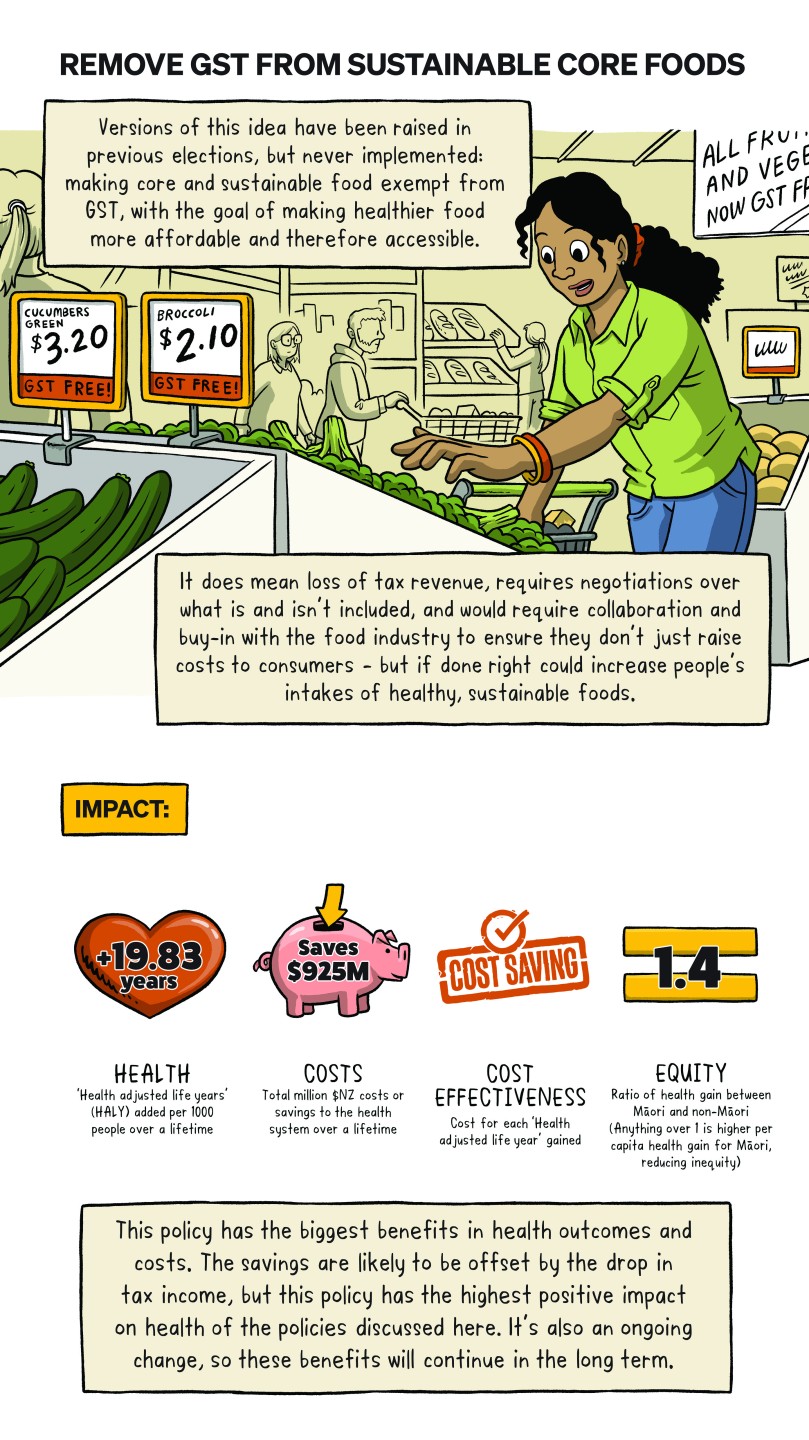
Policy 1: Remove GST from sustainable, core foods: This modelled policy simulated the removal of GST from certain foods. Core foods were defined using established definitions from Australia. Sustainable foods were defined as those food groups included in the EAT Lancet diet. This modelling used NZ price elasticities,9 and impacted dietary intake of New Zealanders over a range of dietary risk factors (Figure 1).
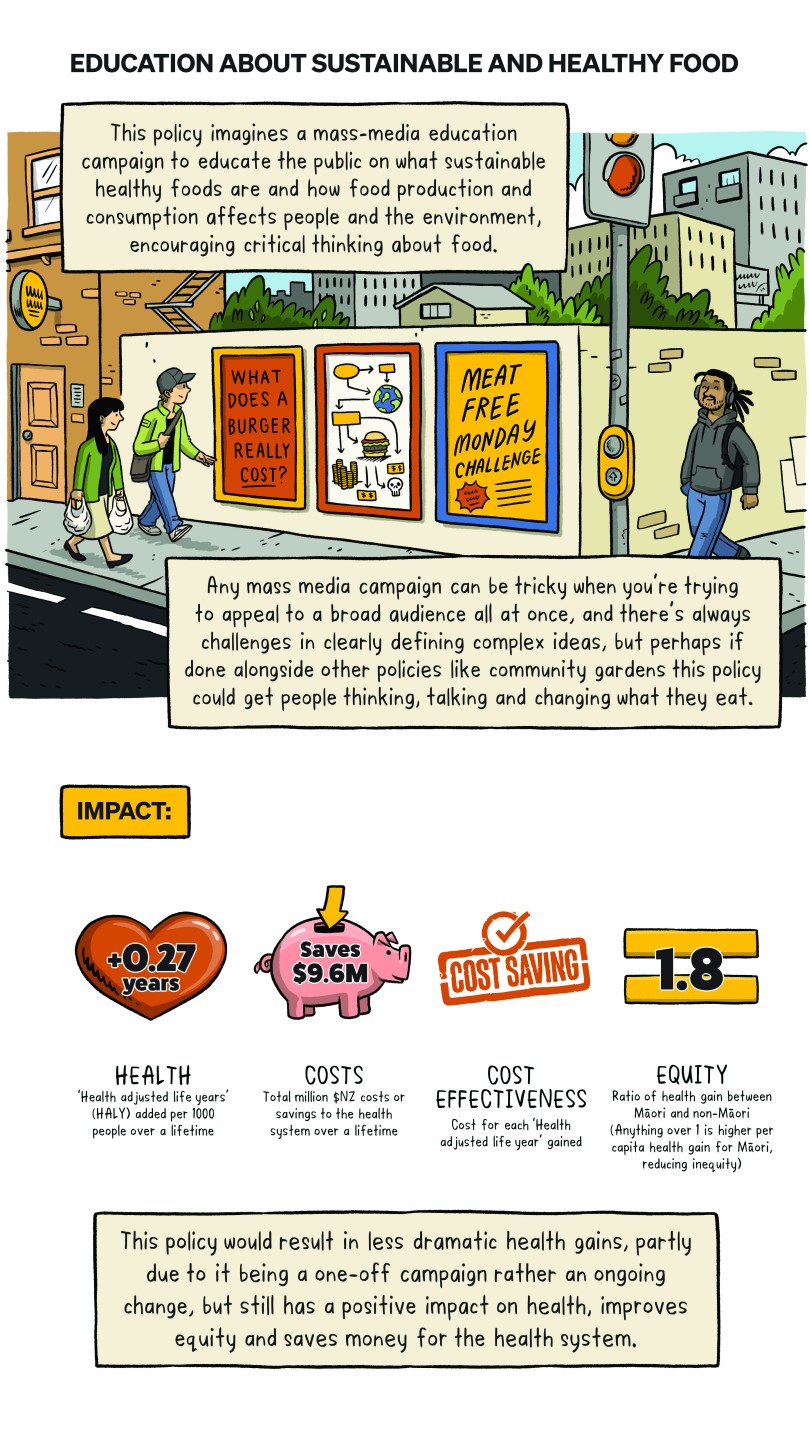
Policy 2: Education about sustainable and healthy food: Under this policy, the Government funds a mass media campaign encouraging consumption of healthy, sustainable foods. Alongside a focus on healthy eating, it would include key topics such as how NZ grows food, how food production practices affect people and the environment and promoting meat-free meals (e.g. at least once a week). The policy was modelled to change fruit and vegetable intake based on the best available evidence.10,11 Input into the design of such a mass media campaign by Māori would be essential to ensure this policy does not contribute to dietary and health inequities (Figure 2).
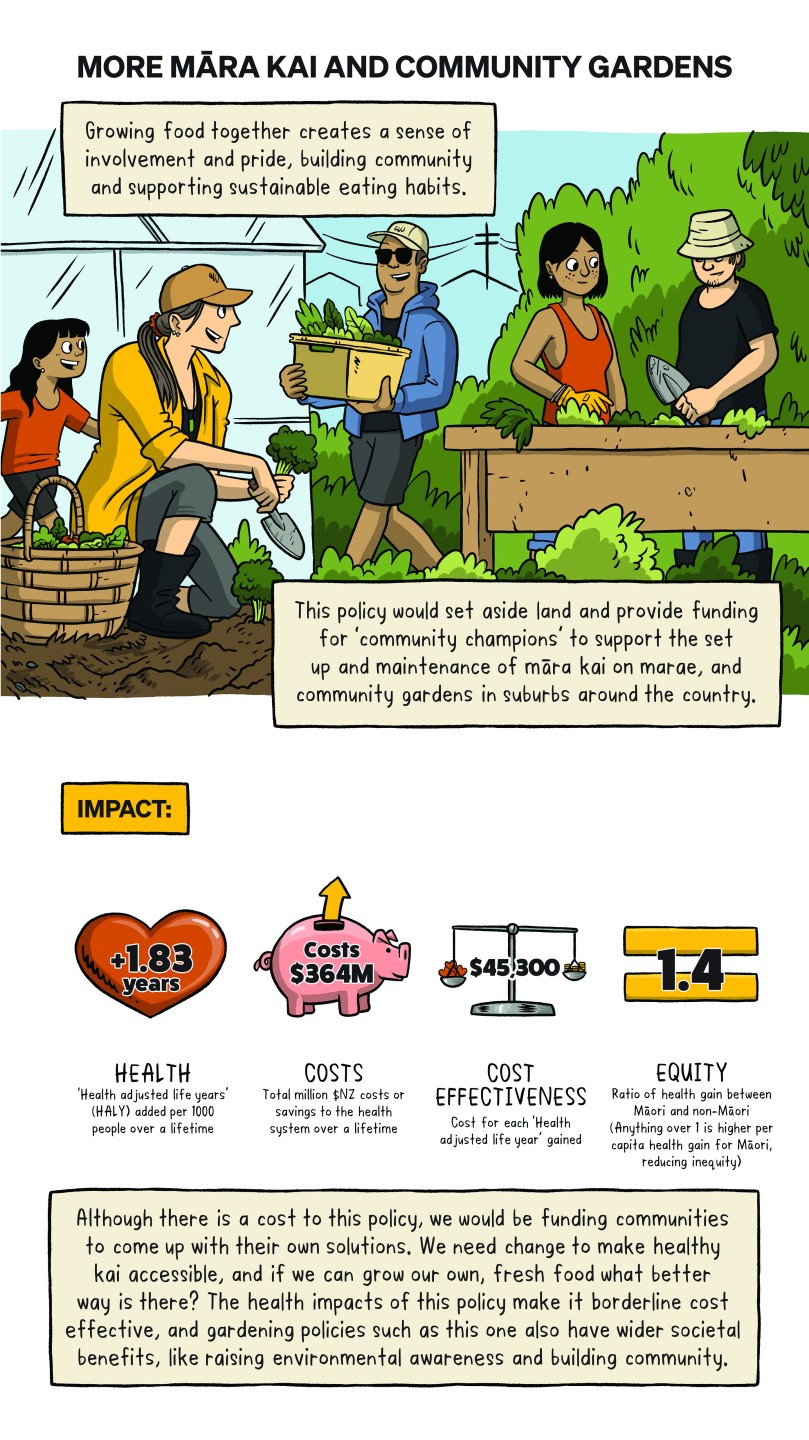
Policy 3: More māra kai and community gardens: This policy would provide land, funding and a part-time community champion to set up and maintain community gardens in suburbs and māra kai at or near marae around the country. For those marae and suburbs that already have māra kai or community gardens, the provided support could be used to help maintain and expand their gardens. The gardens would incorporate knowledge transfers and food hubs with connections to existing farmers and gardens. These would be co-ordinated by the paid community champions. Key considerations for māra kai include having mana motuhake (self-determination), and food security at the core, and access to māra marae for urban Māori (Figure 3).
The impact of these policies
Removing GST from core, sustainable foods resulted in the largest health gains of the three policies, almost 20 Health Adjusted Life Years (HALYs) per 1000 people. If we put aside the loss of GST income, this policy would generate almost a billion dollars in health system cost savings over the lifetime of the modelled population. While there currently appears to be limited political appetite among NZ political parties for the removal of GST from fruit and vegetables, some of the benefits of this type of approach could be achieved via an alternative, well-designed fruit and vegetable voucher or healthy food credit system for low-income households. This would be more targeted and could be operationalised in non-stigmatising ways (e.g., the credit being built into supermarket loyalty cards). Arguably, this policy shows that, regardless of the mechanism used, lowering the cost of core sustainable foods will have a large health gain for the population.
Education about healthy, sustainable foods generated small health impacts, less than 0.30 HALYs per 1000 people, but is estimated to generate almost $10 million in health system cost savings. Māra kai and community gardens generated almost 2 HALYs per 1000 people, but due to the cost of employing community champions, would cost the government approximately $360 million. This policy was considered borderline cost-effective, costing the government just over $45,000 for each HALY gained. All scenarios produced more age-standardised per capita health gain for Māori than non-Māori, indicating that, if designed appropriately, these could contribute to a reduction in health inequities between Māori and non-Māori.
It doesn’t have to be ‘either–or’
This research shows that these policies have the potential to improve population health. Due to the complementary nature of these policies, they could be implemented simultaneously. A comprehensive and well-maintained mass media campaign to promote the other policies and encourage healthy, sustainable eating may increase the acceptance of the other two policies. For NZ, these policies could also reduce ethnic health inequities; careful policy design involving relevant stakeholders, including Māori communities, is needed to ensure health and equity benefits are realised. There is a range of preventive policies and interventions that have been modelled using similar methods12,13 that can be used by policy makers when they are considering how to support New Zealanders to transition to more healthy and sustainable diets.
What this Briefing adds
- Newly published research has estimated the impacts of three food policies for NZ, informed by food system stakeholder input, to inform real-world policy.
- Removing GST from core, sustainable foods and education about healthy, sustainable foods saved the health system money in the medium to long term, and all policies could potentially reduce health inequities.
Implications for policy and practice
- Policy makers should compare the impact of these policies with other published cost-effectiveness analyses when considering how to support New Zealanders to consume more healthy and sustainable foods.
- With appropriate design, implementing these three complementary policies simultaneously is expected to result in improved health, reduced health care expenditure and reduced health inequities for Māori.
Video: How we model the impact of dietary policies for New Zealand
Authors details
Associate Professor Cristina Cleghorn, Department of Public Health, Ōtākou Whakaihu Waka, Pōneke | University of Otago, Wellington
Bruce Kidd, Independent Researcher, London, United Kingdom (formerly Research Fellow, Department of Public Health, University of Otago, Wellington)
Toby Morris, Independent comic artist and communicator, Auckland
Associate Professor Christina McKerchar, Department of Public Health, Ōtākou Whakaihu Waka | University of Otago, Christchurch